
Flood lighting is used to illuminate large outdoor areas, building facades, signage, and key architectural features across commercial and industrial environments. As part of broader commercial LED lighting solutions, flood lighting systems provide high-output illumination, flexible beam control, and reliable performance for a wide range of exterior applications.
In addition to outdoor environments, flood lighting is also used in specialized indoor applications such as swimming pool facilities, where durable, moisture-resistant fixtures are required to provide safe, consistent illumination in high-humidity conditions.
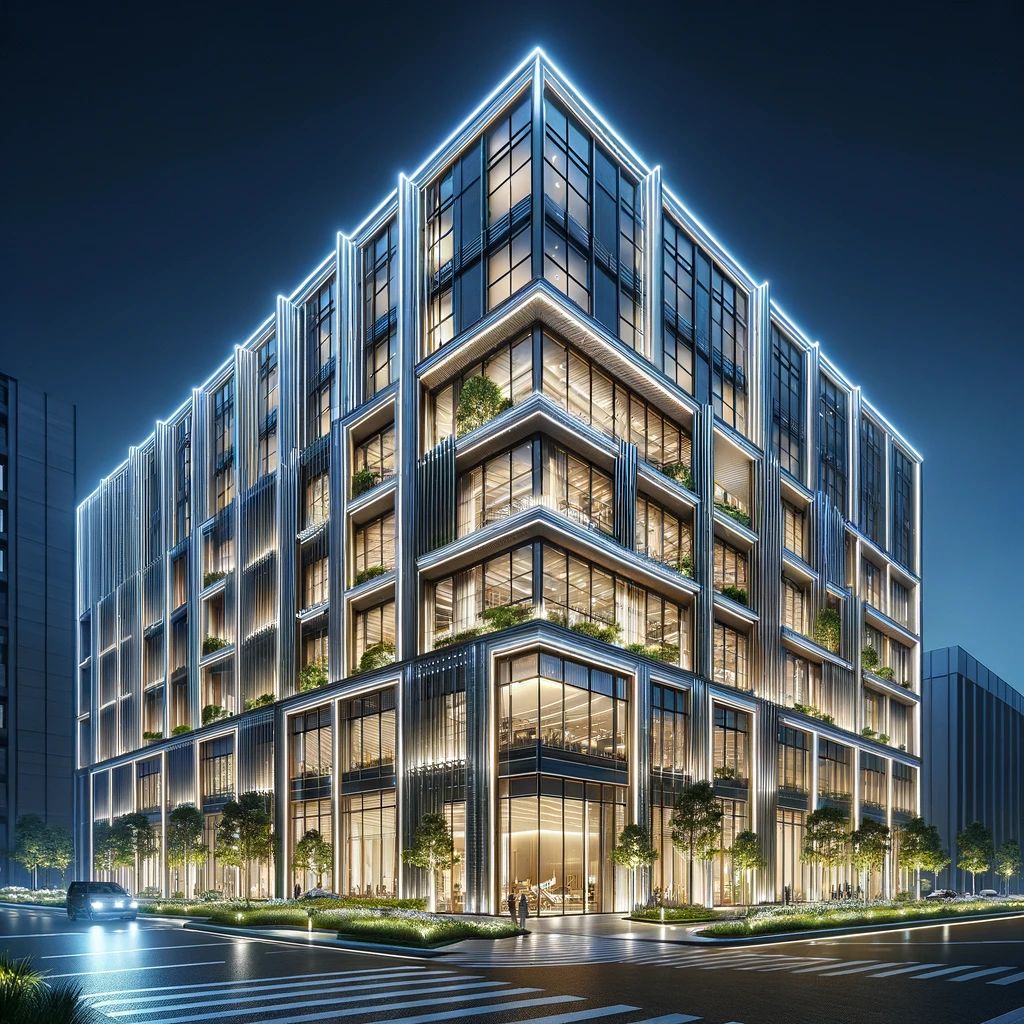
Flood lighting refers to high-output lighting systems designed to illuminate large outdoor or indoor areas using a wide beam spread. These lighting systems are built to provide broad, uniform coverage rather than focusing light on a narrow point, making them ideal for wide-area illumination.
Flood lighting is commonly used for building facades, parking areas, signage, industrial yards, sports facilities, and security applications where consistent, high-intensity light is required across open spaces. Lighting layouts are typically designed to maximize coverage while controlling glare and light spill.
Modern flood lighting systems typically use LED technology to improve energy efficiency, reduce maintenance, and deliver reliable long-term performance compared to traditional halogen and HID systems as part of broader commercial LED lighting solutions.
Delivers powerful, uniform lighting for large outdoor areas and indoor pool environments.
Used for facades, signage, security lighting, and indoor swimming pool lighting systems.
Designed to perform in outdoor conditions and high-humidity indoor spaces.
Used to highlight architectural features and improve nighttime visibility.
Creates visual impact across entrances and exterior structures.
Illuminates monument signs and commercial branding.
Used for branding, events, and architectural effects.
Used for large-scale outdoor environments such as ports and industrial yards.
Provides wide-area illumination for safety and security.
Flood lighting is commonly used in indoor pool environments to provide bright, even illumination across pool decks, water surfaces, and surrounding areas.
Used in schools, fitness centers, and municipal facilities where corrosion resistance and moisture protection are essential.
General-purpose outdoor illumination.
Used for architectural and branding applications.
Designed for large-area outdoor coverage.
Fixtures designed for high-humidity environments such as swimming pools.
Used in environments where moisture, chemicals, or humidity are present.
Selecting the right flood lighting system depends on the application, mounting conditions, and performance requirements. The following factors help determine the most effective lighting solution for your project.
Flood lighting can be configured with narrow, medium, or wide beam angles depending on the application. Narrow beams are typically used for targeted lighting such as signage or architectural features, while wider beams provide broader area coverage.
The height and position of the fixture directly impact light coverage and performance. Higher mounting locations may require higher output fixtures or specialized optics to maintain consistent illumination.
Different applications require different lighting approaches. Building facades, signage, high mast lighting, and security lighting, corrosion resistance for pool environments, moisture and humidity protection (IP rating). All have unique performance requirements.
Color temperature affects both visibility and appearance. Neutral and cool white light is commonly used for visibility and security, while RGB lighting systems are used for architectural and branding applications.
Proper fixture selection and aiming help reduce glare and improve visual comfort, especially in areas with pedestrian or vehicle traffic.
Outdoor flood lighting must be designed to withstand environmental conditions such as moisture, dust, and temperature variations.
LED flood lighting systems are designed to provide high-output illumination while reducing energy consumption compared to traditional lighting technologies.
Fixture location and accessibility should be considered to ensure long-term serviceability and minimize maintenance disruptions.
Lighting systems for large outdoor parking areas.
Explore Parking Lot Lighting →General outdoor lighting for commercial properties.
Explore Area Lighting →Explore complete outdoor lighting systems.
Explore Outdoor Lighting →LED flood lighting provides high-output illumination for large areas, building facades, signage, and specialized indoor environments.
Yes. Flood lighting is commonly used in indoor swimming pool facilities where moisture-resistant and corrosion-resistant fixtures are required to provide safe and consistent illumination.
Lighting used in pool environments should be designed for high humidity and potential chemical exposure, with appropriate sealing and corrosion-resistant materials.
Flood lighting is directional and used for targeted illumination, while area lighting provides more uniform coverage across larger spaces.
RGB flood lighting uses color-changing LEDs for dynamic lighting effects in architectural and commercial applications.
Planning and design guidance for parking areas, roadways, and outdoor environments.
View Guide →Lighting strategies for communities, shared spaces, and residential developments.
View Guide →Lighting systems for business environments and commercial properties.
View Guide →From large outdoor areas and building facades to indoor swimming pool and aquatic facility lighting, LED flood lighting systems are designed to deliver high-output performance, durability, and flexibility across a wide range of applications.