(844) 533-7767
(661) 645-1071
ledprosworldwide@gmail.com
Lighting retrofits continue to be one of the most effective ways to improve energy efficiency, reduce maintenance, and upgrade facility performance. This guide covers the evolution of retrofit technologies, common applications, and key considerations for modern lighting upgrades.
Lighting retrofits have been at the core of my business since the early days of energy-efficient lighting. Going back to 1994, I was working on retrofitting older 8-foot T12 fluorescent systems with newer 4-foot T8 lamps in high-ceiling warehouse environments. Many of these fixtures contained 4, 6, or even 8 T12 lamps, making them inefficient and costly to operate.
At the time, utility companies were offering aggressive rebate programs—often covering 80% to 90% of the retrofit cost—also to encourage the transition from magnetic ballasts to more efficient electronic ballasts. These early projects laid the foundation for what would become a long-term shift in how commercial and industrial facilities approach lighting.
As part of broader commercial LED lighting solutions, lighting retrofits today continue to evolve, helping facilities upgrade outdated systems with modern, high-performance lighting designed for efficiency, reliability, and long-term value.
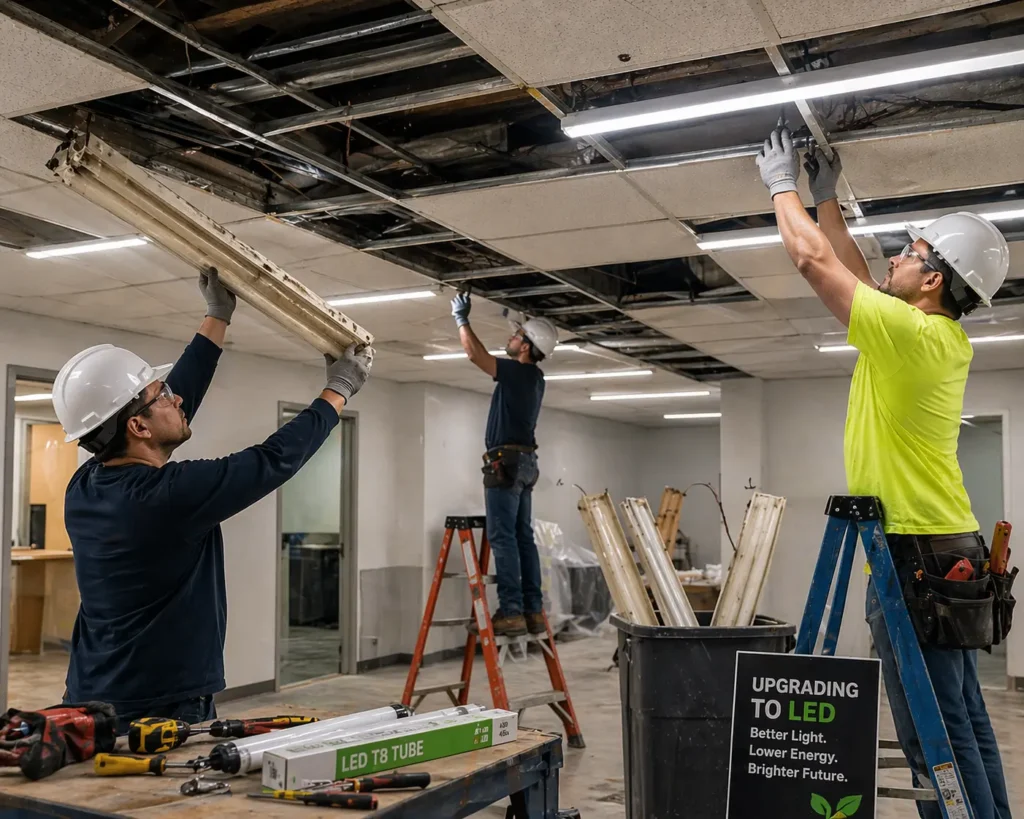
After the initial transition from T12 to T8 systems, the industry continued to evolve. Magnetic ballasts were phased out and replaced with electronic ballasts, improving efficiency and reliability across commercial lighting systems.
As newer technologies emerged, we began working with early LED T8 retrofit lamps. While promising, these early LED solutions presented challenges—particularly heat management issues—and in some cases, there were reports of failures and even fire risks in poorly designed products.
Before LED fixtures became the dominant solution, we also worked extensively with induction lighting systems. Induction high bays and flood lighting were widely used as an alternative to traditional HID systems, offering longer life and improved efficiency at the time.
Over time, LED fixture technology improved significantly and began to replace both fluorescent and induction systems. This shift accelerated as utility companies once again introduced strong rebate programs, particularly for retrofitting cooler door lighting, high bay lighting, and other commercial applications.
Reduce energy consumption by upgrading outdated lighting systems.
Modern lighting systems significantly reduce service and replacement frequency.
Better light quality and consistency improve overall facility operations.
A lighting retrofit involves upgrading or replacing existing lighting systems with more efficient technologies while often using the existing infrastructure. Retrofit projects can range from simple lamp replacements to complete fixture upgrades depending on the application.
T12 and T8 systems upgraded to LED fixtures or retrofit kits.
Warehouses transitioning from HID or fluorescent to LED.
Upgrade older fluorescent systems to LED cooler door lighting.
Parking lot and area lighting converted to LED systems.
Explosion-proof, cold storage, and industrial environments.
Lighting upgrades can involve either retrofitting existing fixtures or replacing them entirely with new LED systems. The right approach depends on the condition of the existing infrastructure, performance goals, and long-term maintenance considerations.
Replacement:
Utility rebate programs have played a major role in lighting retrofit adoption—from early T12 to T8 upgrades to modern LED systems. Many commercial and industrial projects continue to qualify for incentives that significantly reduce upfront costs.
High-output lighting solutions for industrial and warehouse environments.
Explore High Bay Lighting →Lighting solutions for cooler doors, freezers, and refrigerated environments.
Explore Refrigeration Lighting →Lighting systems for parking areas and commercial outdoor environments.
Explore Outdoor Lighting →A lighting retrofit is the process of upgrading existing lighting systems to improve efficiency, performance, and reliability.
Fluorescent, HID, induction, and other legacy lighting systems can be upgraded to LED.
LED lighting offers better efficiency, longer lifespan, improved performance, and reduced maintenance.
Many utility companies offer rebates and incentives for upgrading to energy-efficient lighting systems.
Project timelines vary depending on facility size and scope, but many retrofits can be completed with minimal disruption to operations.
It depends on the condition of existing fixtures and performance goals. Many modern projects favor full replacement for long-term efficiency and reliability.
Explore lighting strategies for business, retail, outdoor, and facility applications.
View Guide →Planning guidance for warehouses, manufacturing facilities, and industrial environments.
View Guide →Outdoor lighting guidance for parking areas, open spaces, and commercial properties.
View Guide →From early fluorescent upgrades to modern LED systems, lighting retrofits continue to provide one of the most effective paths toward improved efficiency and long-term performance. Explore retrofit solutions designed for commercial and industrial environments.